Brave Browser, digital identity sovereignty
Reading Time: 6-9 minutes
Some time ago, I read a long and in-depth article by Darren Loucaides on WIRED US, which tells of the birth of the 5 Star Movement but above all of the Rousseau platform, which today is used by activists of the 5 Star Movement as a tool of direct democracy.
This tool, along with others little is known about, are the pillars of the career of a man named Gianroberto Casaleggio and his mentor, Adriano Olivetti. A real philosophical current that puts the decisions of the participants at the center of the stage.
Tool of direct democracy.
For a moment, let’s try to dissociate the Rousseau platform from the 5 Star Movement and re-imagine the concepts it wanted to transmit, incorporate, define. If we think in these terms, we realize that in reality there is another current, which has now become a real industry, which has been bringing the same kind of revolution for 10 years: it is the blockchain industry, born with the anonymous Satoshi Nakamoto in the now distant 2008.
Through blockchain technology, it is possible to automate the most difficult process in the history of our society. It is not about elections, amendments, parties. It is about democratizing, really, society. Rousseau is a project that today, in the hands of the 5 Stars, is not minimally exploited properly. But this is another story.
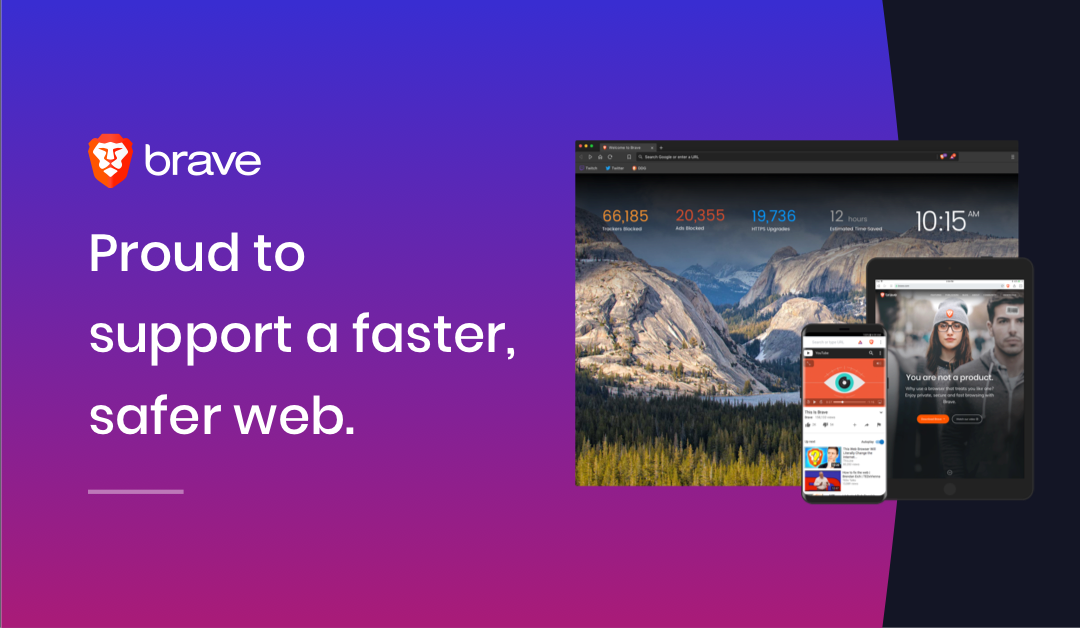
This is instead the story of a project for which it was necessary to start a real transition. This is the story of the transition from Chrome to Brave.
When you think about your digital identity on the internet, the simplest idea is the one associated with your Apple account, or even Google. The Google account records, through various services, a whole series of information, aggregated and not:
- Basic information (Name, Surname, date of birth)
- Detailed information (Home address, phone number, etc.)
- History of visited web pages (via Chrome)
- History of visited places (via Maps)
- Interest in macro or detailed topics (via AdSense)
- Purchase history (via Google Pay)
- General habits and behaviors (via apps installed from the Play Store)
- Usage habits (via statistics in Android)
The Apple account also records some similar information. Obviously there are also other types of accounts and in all cases it is possible to individually deactivate tracking and recording of certain information.
All this, however, allows IT giants to know exactly what the aggregate behavior of certain user segments is, selling this information to third parties who exploit it to target dedicated advertising.
Now, if this process also happened completely in favor of the user (who therefore finds, during web browsing, ads that are suitable for their interests), the problem would indeed be compensated by effective offer.
The reality of the facts is, instead, very different.
Advertising banners, promotional videos and pop-up advertisements constantly invade our reading and browsing experience, invading our privacy and our sanity.
Nobody likes being bombarded with ads that make no sense and indeed, hinder navigation and concentration. But this is the choice that, as users, is made in not deepening the role one has on the internet. Every person, every individual, is like a gold nugget for any company working on the web: being aware of one’s role and value is a burden when making the decision.
And that is why, a few months ago, I started my own ‘digital’ transformation: I uninstalled Google Chrome from all my devices and installed Brave in its place.
Brave is a browser created by the founder of Mozilla, so not exactly the last one who ran away from home, initially conceived with a ‘software base’ different from any other browser, but then aligned with the Google Chrome software base, Chromium.
This does not mean that Brave is equal to Google Chrome, but rather that it uses the same open source modules but with a different surface layer.
Brave is still an immature product: I have tried it multiple times over the last few years, and I still remember when it had very few settings and an interface of debatable intuitiveness. Today Brave is certainly more advanced than a few years ago and incremental progress can already be seen today, although not all available.
First of all, it is available for all operating systems: Windows, macOS, Linux, iOS and Android. Almost all features are present for almost all these operating systems.
Brave is an independent browser and, as such, combines features not exactly commonly used: for example, in addition to the classic incognito browsing mode (which automatically deletes history and cookies on the device), there is a Tor Incognito mode, which in addition to having the same features as ‘normal’ incognito, connects directly to the Tor network to anonymize traffic towards one’s Service Provider.
The central module that really makes Brave the independent browser I chose to make a ‘migration to anonymity’ is the Brave Shield, which directly blocks all scripts and functions of the visited web page, from normal banners to trackers for cookies. Practically speaking, this means that in most cases you can visit websites without having annoying advertising banners appearing constantly, but it can happen that sometimes complete removal of scripts disables main functions of a web page: with Google Docs, for example, it is necessary to disable Shields if you want to exploit real-time collaborative mode on Docs, Sheets and Slides. On the sites of many airlines and credit card companies, similarly, it is necessary to disable Shield to correctly view the login screen, flight selection options or perform online check-in.
Fortunately, it is possible to disable Shield on individual domains and the choice will remain saved in subsequent navigations too. If on the one hand Shields allows you to enjoy content without frills, on the other hand there remains the need for website managers to monetize their content.
This is the purpose of Brave Payments, Brave’s feature that integrates the Basic Attention Token (BAT) cryptocurrency to establish a content economy between users (consumers) and web page managers (creators). To benefit from monetization via Brave Payments, content creators are required to register an account via the Uphold platform and connect their websites to the Brave Rewards platform, which would be the Payments feature on the publisher side. Compensation recognition for user browsing occurs automatically after installing a dedicated plugin which is available for the WordPress platform. In general, it is possible to integrate tracking even if different Content Management Systems are used.
On the other hand, a monetization system is available specifically for users. It works through Brave Ads via remuneration through viewing dedicated banners: the user views the banner and receives a reward, which can then be reused to send recurring donations to publishers or for viewing a specific website.
More and more publishers are applying to become Brave Certified and thus benefit from token revenues. However, Brave Browser as a platform, although no longer immature, still has a long way to go. There are critical points that need to be indicated, at the end of all these beautiful words:
- The Brave Sync feature, to synchronize open tabs and history, works via blockchain but still has sync problems, it doesn’t work well on every platform;
- The Widevine plugin, used to watch DRM-protected content like on Netflix, does not work on Linux;
- On iOS, Brave does not use the Safari rendering engine, but not even WebKit apparently: the app often crashes, is not very fast nor fluid - Chrome works better;
Brave Browser is certainly a pillar of the contemporary free internet, but still needs to find its own raison d’être on consumer electronics. If it remains an excellent choice on Windows and macOS, on mobile there would be a need for greater integration with operating systems - I imagine an agreement with manufacturers to pre-install the app on smartphones.
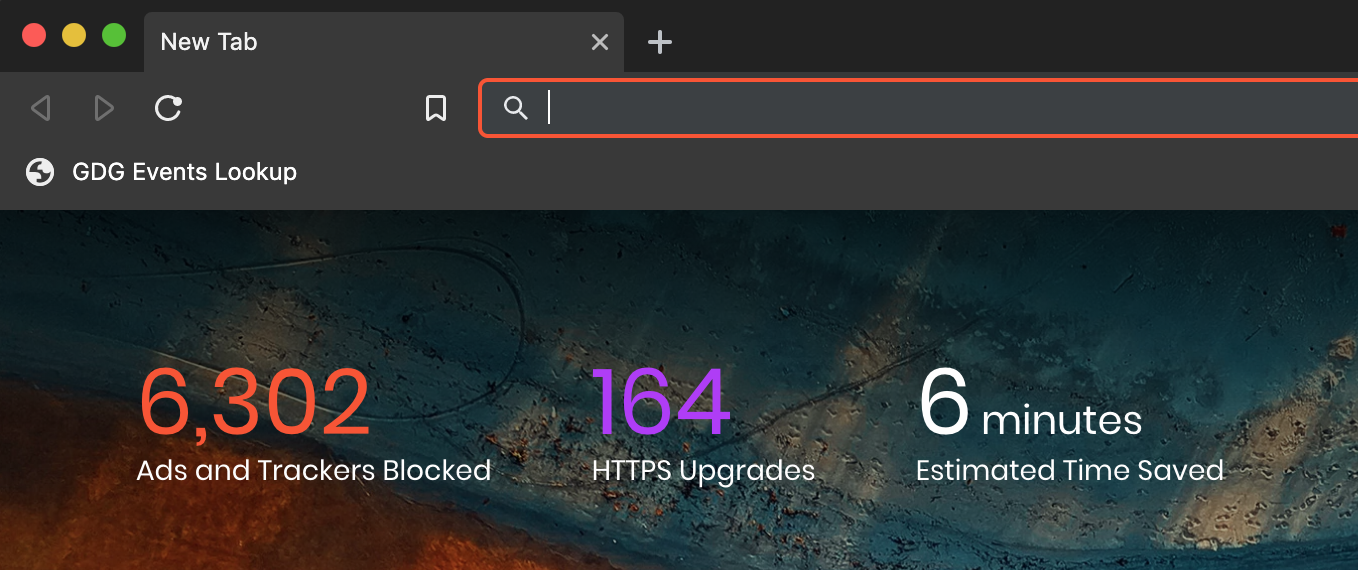
Ah, anyway the answer is no: I’m not regretting Google Chrome. On desktop environment Brave behaves very well, because it is based on Chromium: I saved a lot of time not watching thousands of banners. The screen indicates time saved on a user on a device: I have 4 Google users logged in on 5 different devices (two smartphones, a laptop, a desktop and a tablet), so the total time saved is 20 times what you read below.
I mainly regret Safari on iOS, because Brave is not able to integrate as well as the default browser. And in fact, at the end of these months of incubation, I decided to uninstall Brave on my iPhone and iPad. But it remains on MacBook, on Windows PC and especially on Android smartphones, where it works really very well.
And so yes, you can make the switch, albeit partial, from Chrome to Brave. Even if the mainstream is not yet ready for this idea of ‘paying to browse’: until the early 2000s we paid a lot for internet connection with the 56K modem, but today that internet is almost a primary good for the whole world (in the United States it is by law) and it is very cheap to have an internet connection, we should start getting used to the fact that, to have quality content, we should pay (although only an infinitesimal amount). We are too used to having everything for free, and in this period we are paying the consequences, with privacy scandals that never end.
Perhaps it is time to take back our identity and keep it safe on our devices, instead of on the net.
- Decentralised-first
- Grown a lot in one year
Pros
- Sync via blockchain not optimal
- iOS app poorly optimized
Cons


Giacomo Barbieri
Head of Growth at Routescan. Building at the intersection of crypto infrastructure and AI agents.