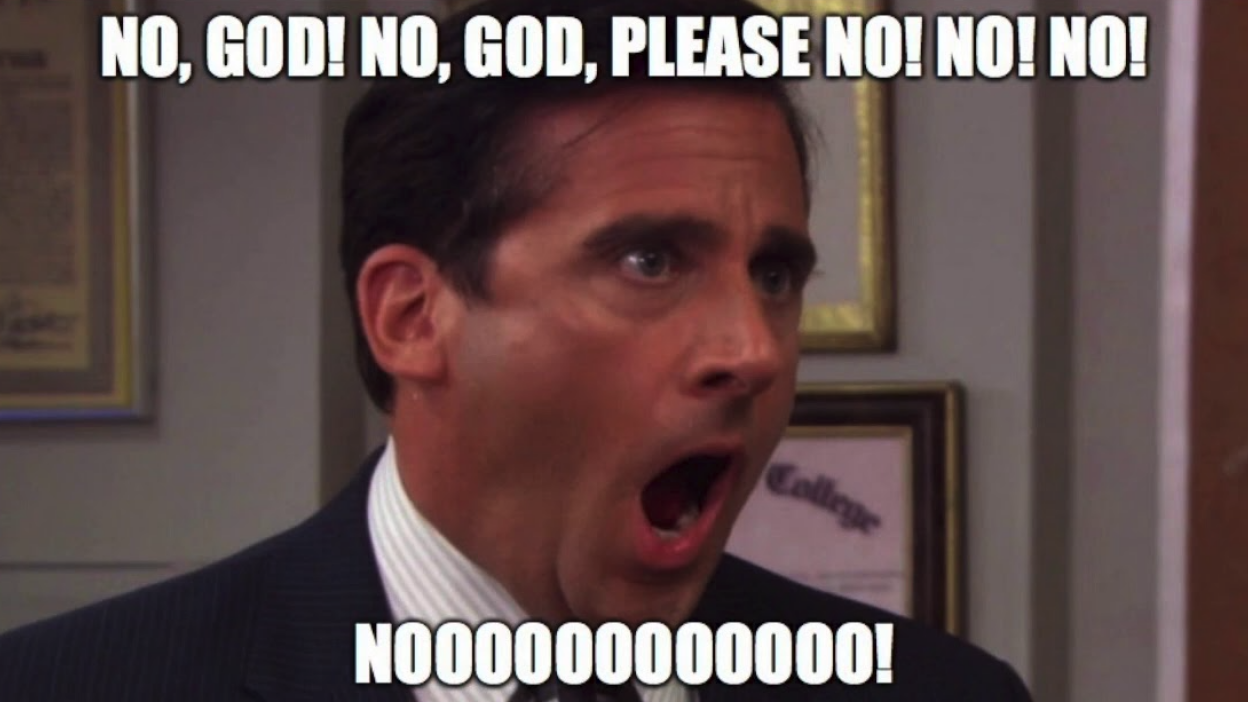
The Office (U.S.), 10 years later
Reading Time: 4-6 minutes
Once every few years, especially in summer, I decide to watch an old TV series in one breath. One of those shows that made TV history, but that I didn’t get to see when they aired, for one reason or another. I started this tradition with How I Met Your Mother when it was ending, then moving to Breaking Bad a few months after the series ended.
This year I decided to watch The Office (U.S.), the popular TV series that created so many memes, used especially in the crypto world and on Twitter, that I couldn’t not watch it. It became a cultural phenomenon.
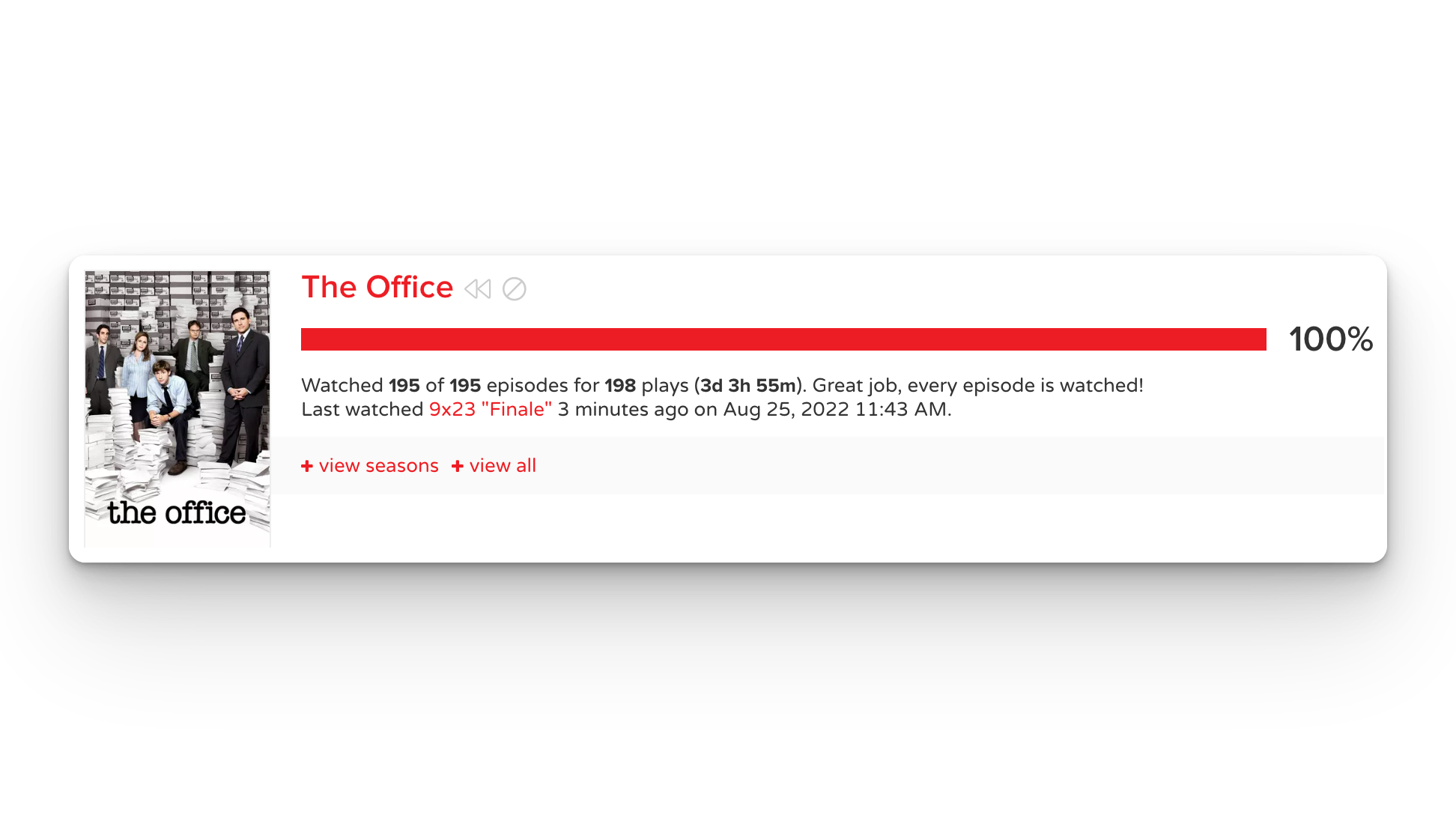
I started watching it seriously at the end of July and today, August 25, I watched the last episode. I watched all 195 episodes, which last altogether over 75 hours, in little more than a month. I watched on average 5-6 episodes a day, with some interruptions. I was mainly traveling and on vacation, so this helped. But if at the beginning I wanted to see The Office only for the memes, once the first season was over I started watching it a bit as part of my growth path as a manager.
For those who don’t know the story of The Office (U.S.) (which from now on I will simply call The Office), the series tells the dynamics that take place in an office of the branch of a town called Scranton (in Pennsylvania) of a fictional company that sells paper called Dunder-Mifflin, from 2005 to 2013. More than 80% of the dynamics are created due to non-sense situations fueled by the branch manager, the now renowned Michael Scott (known in memes for the ‘Thank you’ bow and the phrase ‘It’s Britney, bitch’ driving a convertible, but not only).
At the beginning the only “crazy” one seems Michael Scott, but then (in increasingly subtle ways) you see that each of the staff members, and of the entire company up to the CEO, have extravagant ways of managing an office and staff. Watching Michael Scott’s “feats” from the point of view of a manager in 2022, my first impression was that this could only be a work of total fiction, and that it is impossible that a manager who spends more than 50% doing things that have nothing to do with work can still keep it and not be fired on the spot.
Yet, in the fiction of The Office, the Scranton branch is the most productive of all the others, and is never downsized, although many signals were given during the various seasons. So I asked myself: is this realistic? That is, is it realistic to think that if a boss does everything but his job, his employees are among the most productive?
Watching all the episodes, the answer I gave myself is yes, and it would be feasible even in real life.
During the pandemic, and in the post-pandemic, we learned to work alone each from our own home. But in any case, in previous years, we gradually got used to working efficiently. Just working, eliminating more and more interpersonal relationships between colleagues. This dynamic is perhaps fine for some types of people, but for others it is deleterious: being able to breathe every now and then, being able to have fun working not only for the ‘matter’ of the work, but also for the fun that can be created in the workplace, is an aspect not to be underestimated.
In the office in The Office, Dunder-Mifflin employees organize parties for every religious and non-religious celebration, for every birthday and for every celebration invented on the spot. There is always a good time not to work, and to get to know each other better. But perhaps it is precisely because we know each other better that we can work better together. We can feel more appreciated and in a healthier environment.
During the last 3-4 seasons (from 5 to 9), the office undergoes a series of changes: the ownership of the company changes because the company is on the verge of bankruptcy, then Michael Scott leaves and first a temporary manager arrives (one of the employees), then another, then a search is made, then the CEO changes, then one of the managers of the old ownership buys back the company, and in the meantime a series of employees change roles, leave, return. All even in a few hours, with a speed not normal for those times. Yet today it can happen like this: in a startup, within a few hours, everything can change. The Scranton branch is the perfect representation of a startup moving chaotically.
I imagine that similar dynamics happened in Theranos, in WeWork, in Uber and in a whole series of other unicorn startups that have earned headlines all over the world in the last 10 years. After all, work is not life, and it shouldn’t be, but the work environment can fuel a lot of everyone’s life. The employees in The Office fall in love with each other, hate each other, don’t talk to each other and then talk to each other again. But they all know each other very well, and they know how to make themselves happy.
I believe that the way The Office told the lives of colleagues in a workplace changed forever what an office should be. And this story is even more important today, that the notion of office as a workplace is being lost, and the word is taking on the meaning of “group of people working towards a common goal”. We should fight to keep the notion of “workplace” even if we all work remotely, because technology gives us so many increasingly convenient ways to simulate the experience of being physically together in the same place.
The Office, in 2022, is a petition to keep the office in its original meaning, when this is being lost. Now that I think about it, the closest meaning is being assumed by the community, that is a group of people who are united by one or more interests. I had written about it in a research, a couple of years ago. To return to being a workplace, the remote office must be a community, and managed as such: instead of the Office Manager, the Community Manager is needed; instead of the receptionist, one or more moderators are needed, and so on. Not a clear idea of how this should be done, I worked and thought more about the inputs. But I believe this is what I will work on in the coming months as a manager, that is to make the virtual workplace a community, as well as a group of people.


Giacomo Barbieri
Head of Growth at Routescan. Building at the intersection of crypto infrastructure and AI agents.