Stellar 12 proposes the cancellation of inflation
Reading Time: 1-2 minutes
I have always thought that Stellar was a good blockchain project.
I never had time (and neurons) to read and understand all the features in the whitepaper, but I knew it is a project based more on rethinking the current financial infrastructure, than on the idea of giving the world a ‘liberal’ currency, like bitcoin.
Stellar is supported by IBM and many large and small companies, as well as by many groups of developers who receive, quarterly, funds from the Stellar Development Foundation to power applications in the ecosystem and community.
In the latest protocol update, released a few days ago, reaching version 12.0.0, the Development Foundation proposed disabling inflation.
Stellar had conceived the inflation of the main blockchain cryptocurrency, XLM, as a way to efficiently redirect new tokens generated to development projects on the ecosystem. The basic reasoning was that users of the Stellar community cared about the development of the ecosystem and, therefore, would vote to redirect the new funds generated to projects that would benefit from them, without directly affecting their own funds.
The purpose was genuine. But then pools were born, platforms that allow users to vote for the assignment of funds to a specific address and then obtain those funds for themselves. Below, a small drawing of how it has worked (not very honestly) so far.
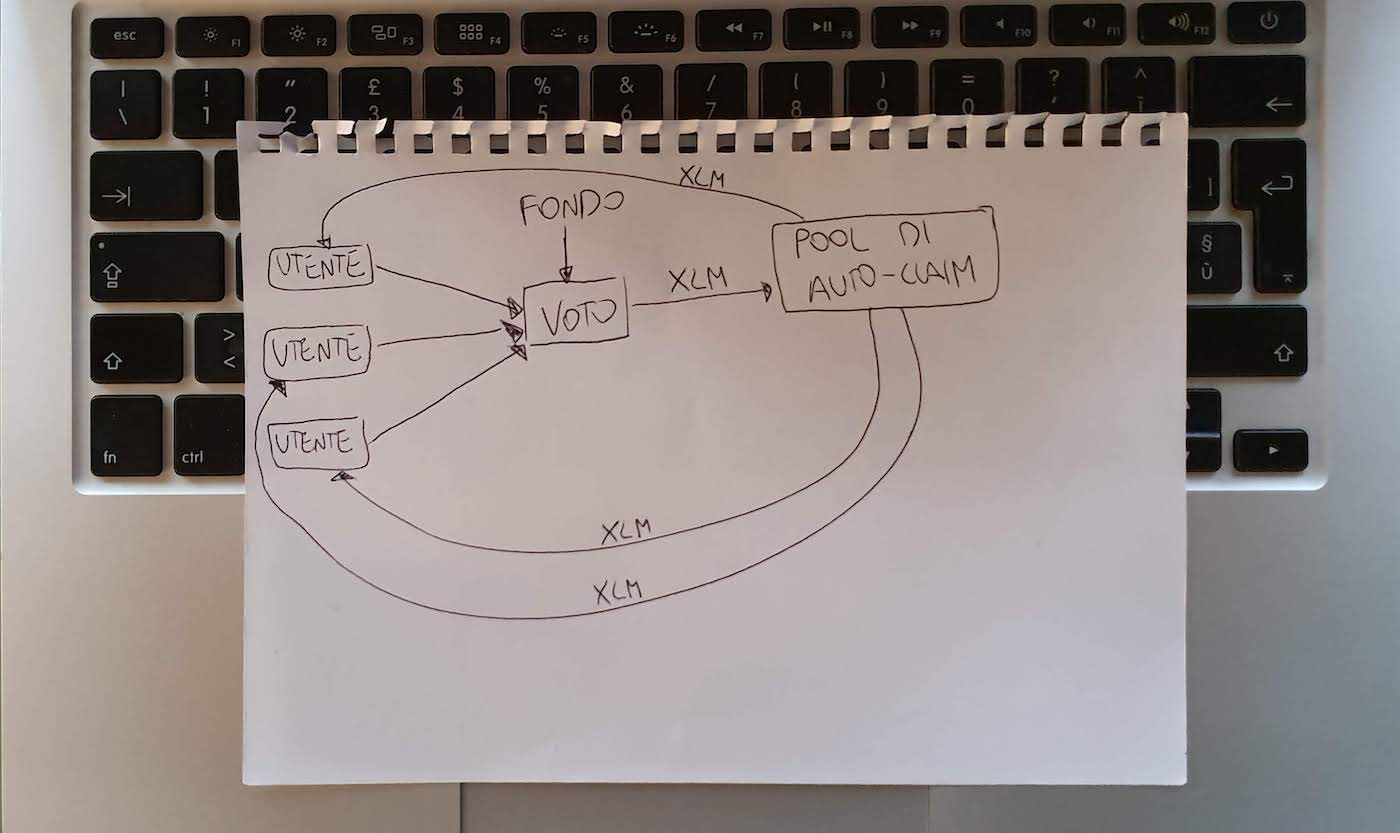
As long as funds are redirected to single projects, but external to the users voting for “donations”, value is created anyway. But when, through the mechanism described above, each user makes a donation which they then take for themselves, everyone increases their funds, and therefore no value is created, because if I have €1 and everyone else has €1, if I receive another €10 and everyone stays with €1, I have more purchasing power than the others, but if everyone else also receives €10, our purchasing power aligns, and therefore the differences cancel out. We might as well all have had €1 then.
Furthermore, all these transactions that are created and do not contribute to creating value, only increase the mass of transactions generated, and clog the blockchain, decreasing scalability.
The proposal to disable inflation is in protocol v 12.0.0, but if during the vote on October 28th it is not approved, the Stellar Development Foundation will release a version 13.0.0 with all the functions of 12.0.0 except for the disabling of inflation, and there will be a revote after a few weeks.


Giacomo Barbieri
Head of Growth at Routescan. Building at the intersection of crypto infrastructure and AI agents.