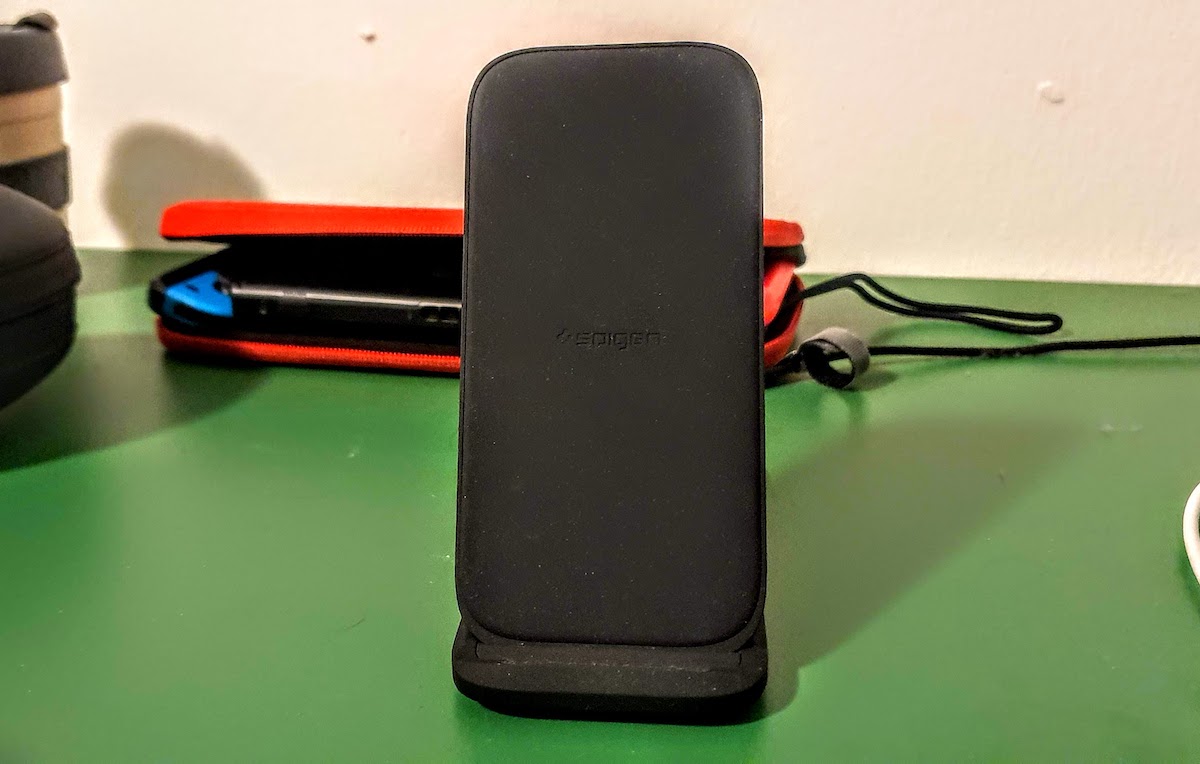
Spigen Steadiboost Flex Review
Reading Time: 2-2 minutes
A month ago, Spigen sent me some chargers to test and some discount codes to distribute in my network.
It took me a month to give birth to some impressions on the Steadiboost Flex wireless charger - and I don’t think I will write an article on the other chargers I received - because how do you review a charger? Besides the list of technical specifications, what can be discussed is its quality and robustness, its versatility and the - most important thing - charging capacity.
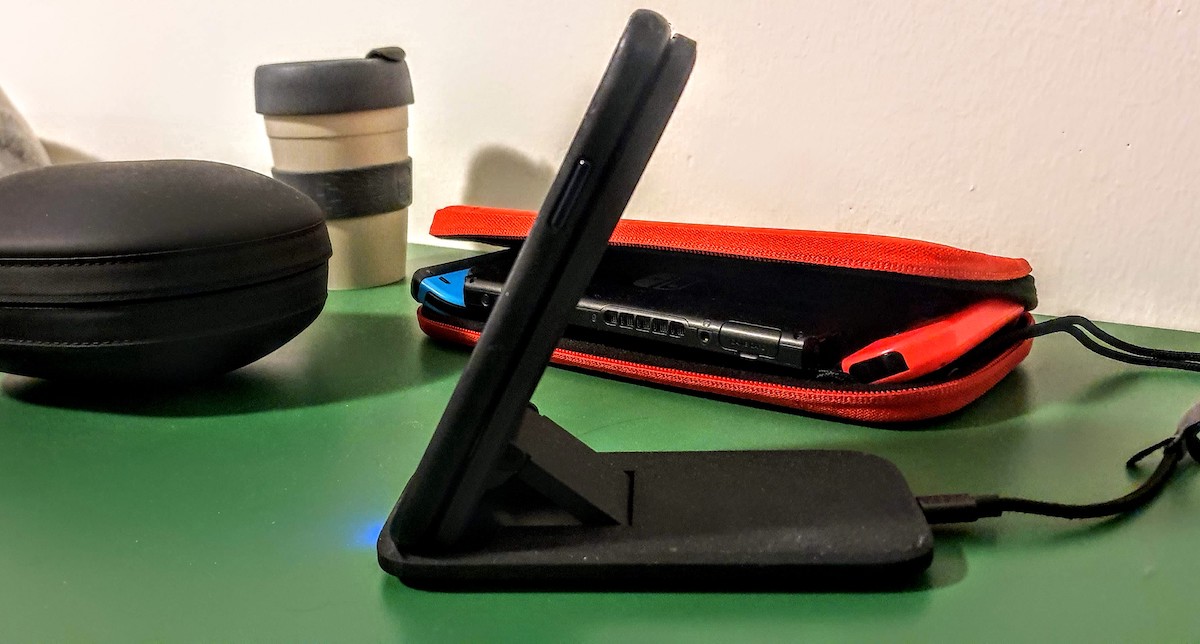
So: yes, it is built well. It is made of plastic, not steel or precious material. But it is great like this, because the stand must grip the smartphone well: if it had been made of steel or aluminum, the device would have slipped, or would have had a precarious grip anyway. And instead like this, the feeling is of a plastic that does not let whatever is placed on it slide. The stand can be folded until it coincides with the base, but it makes little sense to use it in that mode. It is in matte black color, which I don’t mind and matches the space gray of the iPad Pro and MacBook Pro. It also has a single-socket transformer, but I have never used it because I believe it is useless for everyday life: fewer and fewer people use a transformer with only one USB port.
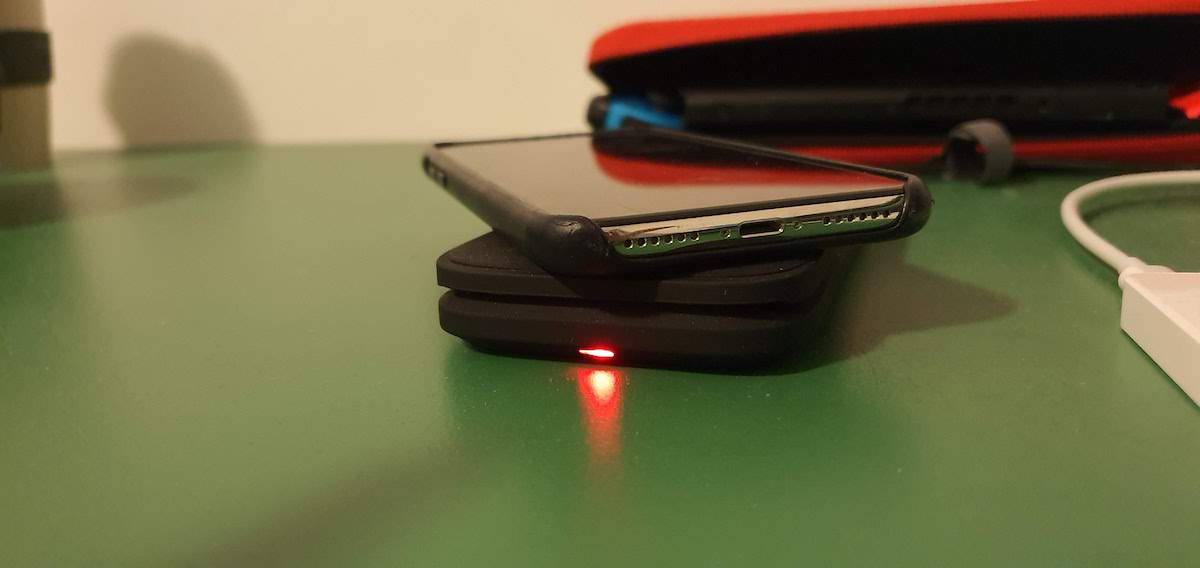
The versatility struck me: it supports the fast charging of my Anker 4-port transformer, and connects with a USB-A (the standard one, to be clear) which becomes a USB-C, therefore usable also for other devices I have. The cable is very resistant, it resembles those of AmazonBasics. For now, it has not yet cut or frayed, but I have only had it for a month, so I can’t say if it can last years.
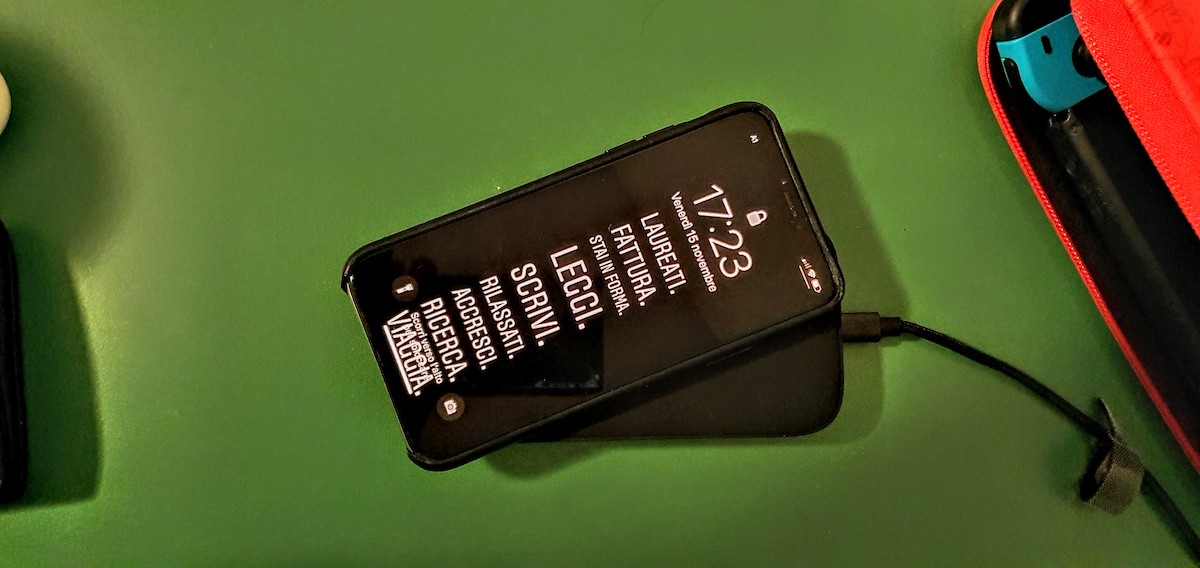
To estimate the charging capacity, I did a test for the worst case, which should indicate that it cannot do worse than this. I charged from 0% (actually off) to 100% my iPhone X which is now two years old and has a battery that is no longer optimal (89% performance) not using fast charging: it took about 5 hours to charge the whole battery. Counting that it is wireless charging (therefore slower than cable charging), counting that with fast charging it charges faster and that with a more recent smartphone the charge could be optimized better, I must say that I am satisfied: in general, during the day, it is enough for me to leave the smartphone (Galaxy Note 10 or iPhone X) for half an hour to see it charged at least 30% more.
What more to say. Yes, I like it. I am using it. Is it worth the €50 at which it can be purchased on Amazon? Maybe there are better wireless chargers, but the combination of ‘stand mode’ and ‘base’ mode and the USB-C port for power make me think that this charger is more versatile than others.


Giacomo Barbieri
Head of Growth at Routescan. Building at the intersection of crypto infrastructure and AI agents.