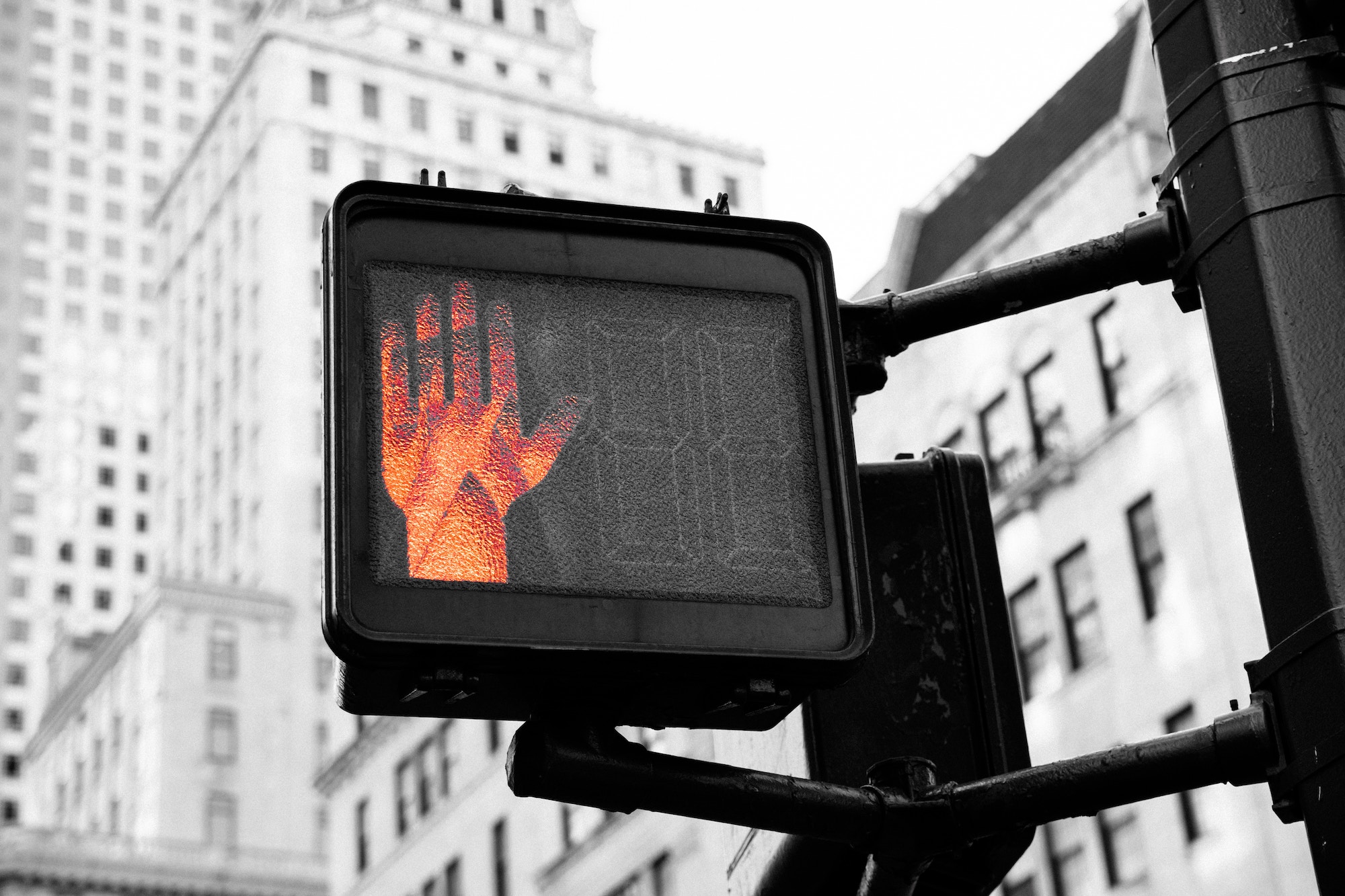
The Courage of Waiting
Reading Time: 3-5 minutes
I would like to talk about something that has to do with waiting.
It is not an obvious connection, but try to imagine it with me: waiting is that concept that makes us think that something will not happen immediately. Now. But that it will happen later.
Now, the reason why a certain thing, a certain fact might happen later, is more than one: we can wait because we are waiting for someone to do something; we are waiting for something to happen by inertia; or we can force ourselves to wait to better understand the reality that surrounds us.
Today we are surrounded by cues that beg us not to wait: click here, listen now, buy immediately.
We are all (or almost) subscribed to Amazon Prime because we cannot do without free shipping in one or two days. We hardly know what it means to wait anymore. During my childhood, I always waited for Christmas to receive gifts.
And in retrospect I realize that the real gift was the waiting itself, because it made me live with desire. Today we live with lowly and useless desires that we manage to satisfy immediately, and with impossible desires that our idols and influencers on the internet make us dream of.
I dream of buying a Tesla Model 3. I would like it to be my first owned car. It costs quite a bit of money, but I realize that the desire is now so little achievable, that it remains in the drawer. And dreams in the drawer are not the ones that make us get up in the morning. If anything, they are the ones that make us feel powerless in achieving them.
Between 2015 and 2018, in my period of maximum activity as a blogger and reviewer of consumer electronics products, I received dozens of packages a month. I was like a junkie of satisfied expectations. I didn’t have time to get excited about testing a new phone, that immediately I had another one. And then a computer. And then a video game. And then a TV. And then all over again. The waiting period had become so short that I would never have thought of waiting to have anything else. That I would always have everything immediately.
And I was wrong.
If I remember correctly, in the summer of 2017 (or maybe it was 2016), I had to review several desktop computers, mini-pcs. There was a moment when I had 3 in the house. In that period I was also taking an extremely useful exam at the university: Electronic Computers. In short, for quite a few summer evenings, I started studying a book that I still find beautiful and extremely complete today, which made me understand how the basic electronics of a computer worked. The book is Structured Computer Organization, by Andrew Tanenbaum.
I immediately used the knowledge learned in the book to write all the reviews of those mini-pcs, measuring the clock frequency, the processor temperature, the TPU, and a whole series of values that gave me the general understanding I needed to say that a computer was more or less performing in certain conditions.
To do all these tests, I took quite a bit of time, but I knew the theory very well, so it didn’t take me that long. For the university, I had deepened the dynamics, and then I just had to read the results to draw conclusions.
Of course, more experienced journalists will tell me that the level of detail is another. But I believe I play more the role of the one who shows everyone that anyone can do their own in-depth analysis.
But the key word is always waiting.
And certainly, because in the era of fast information, waiting is a luxury that not everyone can afford and an action of courage that not everyone is willing to perform.
Waiting is that act of heroism that the user takes to say ‘I don’t stop at the title’, ‘it’s not enough for me’, ‘I didn’t quite understand’, ‘I want to understand more’, ‘this thing doesn’t add up’. It is a heroic act, indeed, a superhero one, because waiting to understand, deepening a certain issue, means stopping while time flows. While the feed grows. While notifications accumulate and tasks pile up.
It means saying no to time, and yes to the mind. No to the feed, and yes to critical thinking. No to notifications, and yes to our dignity.
Now someone might think that I am exaggerating, but I really don’t think so: letting time, the news feed, notifications and tasks overwhelm us in everyday life makes us poor and empty people, manipulable and unstable. Because we have no thinking capacity, ‘I don’t understand that thing, or, even worse ‘I trust him/her’. Without having understood why to trust. Without having checked what happened before, and imagined what could happen after.
I leave to you the thought of how this type of reasoning has already influenced huge changes in recent history, especially in the last 10 years. You will have to do the reasoning.
I would be pleased if this in-depth analysis could become the launch pad for a broader discussion on the meaning of in-depth analysis and the value of patience, maybe right on social media. Because everything can be controlled, just realize the damage it is causing.
Have patience, and you will live better.


Giacomo Barbieri
Head of Growth at Routescan. Building at the intersection of crypto infrastructure and AI agents.